 Football Ground Map
Football Ground Map
Football Ground Map

The 2026 FIFA World Cup is the biggest tournament in the history of the game. Spread across 16 host cities in three countries - the United States, Canada, and Mexico - and featuring 48 teams for the first time, the tournament presents a wealth of betting opportunities for football fans. But while most bettors focus on team form, squad depth, and historical tournament records, groundhoppers have a distinct advantage that goes largely untapped: intimate knowledge of the venues themselves.
Stadium knowledge is not just trivia. The capacity, the pitch dimensions, the altitude, the climate, and the home crowd effect at each venue all have measurable impacts on match outcomes. For football fans who track grounds, this is second nature. For bettors, it is an underused edge.
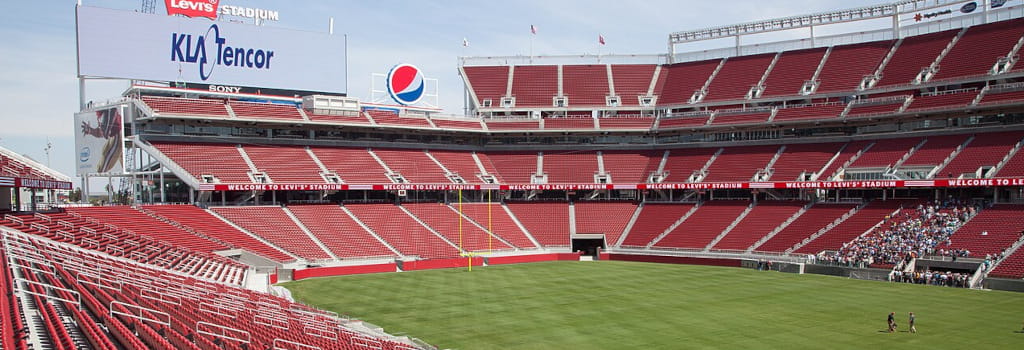
The 2026 World Cup will be played at 16 stadiums across North America. The US venues include MetLife Stadium in New Jersey, which will host the final, as well as AT&T Stadium in Dallas, SoFi Stadium in Los Angeles, Levi's Stadium in San Francisco, and several others. Canada contributes BC Place in Vancouver and BMO Field in Toronto. Mexico hosts the Azteca in Mexico City - one of the most iconic grounds in world football - alongside Guadalajara's Estadio Akron and Monterrey's Estadio BBVA.
For anyone who has tracked their ground visits, several of these names will be familiar from club football contexts. MetLife has hosted Copa America and Gold Cup matches. The Azteca is the only stadium to have hosted two World Cup finals. AT&T Stadium in Dallas is one of the largest indoor venues in the world. These are not abstract statistics - they are factors that directly influence how matches play out.
The Azteca in Mexico City sits at 2,240 metres above sea level. Teams playing there for the first time in this tournament will face altitude fatigue - a well-documented physiological effect that reduces aerobic performance and increases error rates. European sides travelling from sea-level preparations are particularly vulnerable in their first match at altitude. This is not speculation; it is measurable in historical data from previous tournaments and club competitions held at the same ground.
Climate is a second factor. The US summer heat at venues like AT&T Stadium in Dallas - which can exceed 38 degrees Celsius in June - affects high-intensity pressing sides more than those built for possession and slower tempo. Groups scheduled in Texas and Florida will see different tactical patterns than those played in the cooler Pacific Northwest.
The home crowd dynamic at the Azteca deserves its own mention. Mexico's support at this ground is unlike almost anything else in world football - the atmosphere is measurable in its effect on referee decisions and on the psychological state of visiting sides. Any market involving Mexico at the Azteca should factor this in.
Not all World Cup pitches are equal in dimension. While FIFA mandates a range rather than a fixed size, the playing surface at a 105,000-seat stadium like the Azteca behaves differently to a tighter configuration. Wide teams with pace on the flanks benefit from larger pitches; compact defensive sides prefer tighter dimensions that reduce the space for through balls and wide play.
American Football stadiums converted for the World Cup - including MetLife and AT&T - present specific surface conditions. The grass quality, the pitch drainage, and the playing surface response all differ from purpose-built football grounds. Groundhoppers who have attended events at these venues will have first-hand impressions that no data sheet captures.
The practical application of venue knowledge in betting is straightforward. Before placing any match bet, consider which venue the match is played at and whether the conditions - altitude, climate, pitch size, crowd atmosphere - favour one side over the other. This is a layer of analysis that most casual bettors skip entirely.
For total goals markets, altitude venues historically produce fewer goals per match than sea-level equivalents at similar competitive levels. For half-time/full-time markets, sides unfamiliar with extreme heat often start strongly but fade - creating patterns in score at half-time versus full-time. For Asian handicap markets, the home crowd effect at the Azteca is consistent enough to factor into line selection when Mexico are involved.
Finding reliable odds and operator comparisons for World Cup betting is its own challenge. For football fans looking for a structured starting point, Totalizators.com sports betting reviews covers operator comparisons, market availability, and bonus offers relevant to major tournament betting - useful context before committing to a platform for the duration of the tournament.
The group stage draw determines which venues each team will visit. A group assigned primarily to altitude venues disadvantages European sides unused to thin air. A group concentrated in Texas heat disadvantages high-pressing Nordic and Northern European sides. The venue assignments are not random from a competitive standpoint - they have betting implications that are knowable in advance of the matches.
For the 2026 tournament, following the venue assignments closely in the weeks after the draw is one of the most productive pre-tournament research steps a bettor can take. Cross-referencing which sides have prior experience at high-altitude or extreme-heat venues - through club competition or previous international fixtures - gives a systematic advantage in early group stage markets.
As the tournament progresses to the knockout rounds, the venue assignments become less predictable but no less important. The semi-finals and final at MetLife in New Jersey will be played in conditions familiar to no nation - a genuinely neutral environment in the largest outdoor stadium in North America. The final at MetLife will likely be the highest-attended football match ever played.
For groundhoppers tracking their venues, the 2026 tournament offers an extraordinary opportunity. Sixteen new or newly relevant grounds on three continents, all hosting the sport's biggest competition. For bettors, those same sixteen grounds offer sixteen sets of conditions that reward the kind of detailed venue knowledge this community has been building for years.
Stadium knowledge is an undervalued betting edge for the 2026 World Cup. Altitude, climate, pitch conditions, and crowd dynamics are all measurable factors that influence match outcomes - and football fans who track grounds have been accumulating exactly this kind of knowledge, often without realising its analytical value.
Approach the 2026 tournament the way you approach a new ground visit: with curiosity, research, and attention to detail. The fans who know their venues have a genuine advantage. It is time to use it.

My daughter's first ever football match - Orlando City v Atlanta United, August 2019. Written for Izzy to read when she gets old enough. Vamos Orlando
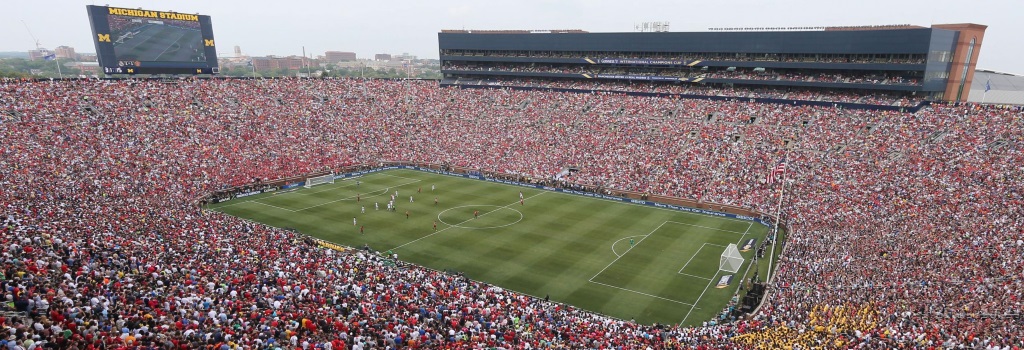
An in-depth look at the biggest football attendances ever recorded, from the 1950 World Cup to pre-season friendlies in the States and the Scottish ground with dozens of 100,000+ attendances
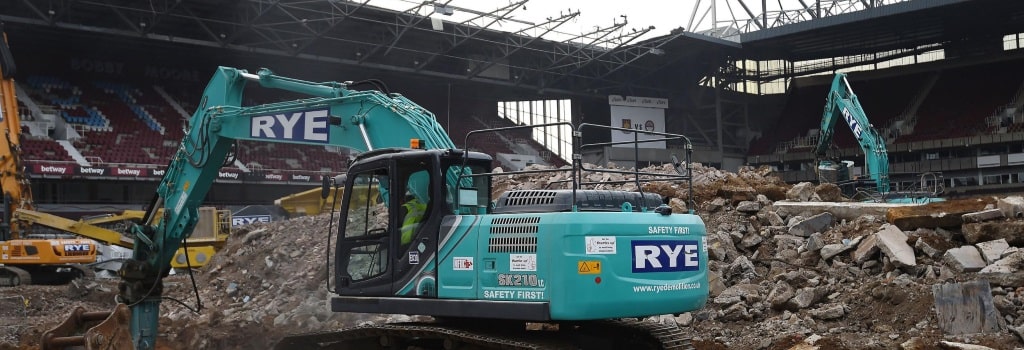
All good things have to come to an end, and the same unfortunately has to be said for football stadiums too. This article looks at the grounds which are soon to host their last match, the stadiums whose days are numbered and where fans will be watching their football from next.

Taking my son to his first football match was one of the best experiences I've had as a father so far. I've written this article for Alex to read when he gets older.