 Football Ground Map
Football Ground Map
Football Ground Map

The 2026 World Cup has already delivered a wave of excitement, and we haven't even reached the knockout stages yet. Dramatic equalizers in the dying minutes, goalkeepers pulling off saves that defy logic, underdog nations holding giants to draws, the group phase alone has given fans more talking points than most tournaments manage across their entirety.
The atmosphere inside the host stadiums has been electric, and the quality of football on display has silenced those who doubted whether a tri-nation hosting format could generate genuine tournament intensity.
Beyond the football, this edition has also been widely reported as the biggest betting event in history. Major sportsbooks are projecting record-breaking wagering volumes, with hundreds of millions of individual bets expected to be placed across the tournament. Even platforms outside traditional sports betting have entered the space; online casino operators known for gaming bonuses like free £5 no deposit offers have started rolling out World Cup betting features to capture the surge in sports interest.
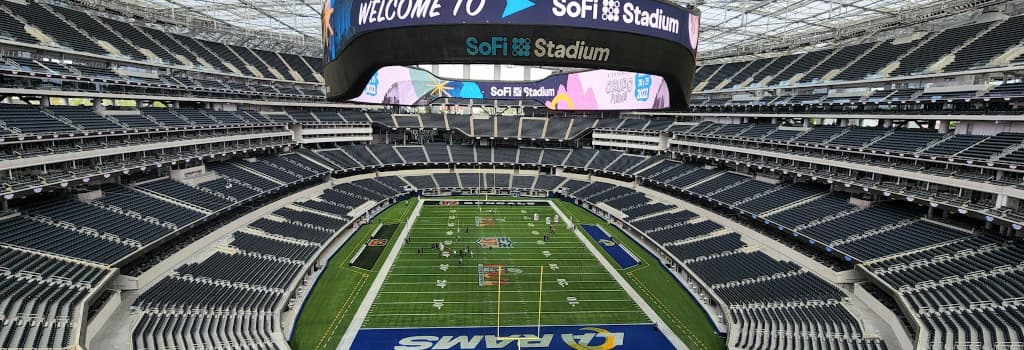
The commercial scale of this tournament is simply unprecedented. Yet for all the coverage of results, odds, and player performances, relatively little attention has gone to the physical venues themselves. The 2026 World Cup is being staged across sixteen stadiums in the United States, Canada, and Mexico, and they vary enormously in character. Among all of them, one stands in a category entirely its own: SoFi Stadium in Inglewood, California.
SoFi Stadium cost approximately $5 billion to build. That figure alone sets it apart, but the money isn't the story; what was built with it is.
The stadium was designed by the architectural firm HKS, whose team set out from the beginning to create something that went beyond a conventional sports venue. Their stated ambition was to build a structure that could stand as an equal participant to the events taking place inside it, whether those events were NFL games, major concerts, Olympic ceremonies, or World Cup matches.
The result is a building that challenges every assumption about what a stadium should be. Located south of Los Angeles in Inglewood, it sits within the broader Hollywood Park development, a sprawling campus that includes retail, dining, a performance venue, and a man-made lake with a waterfall. The stadium itself is covered by a vast translucent canopy that shelters all 70,000 seats while still allowing natural light and airflow.
The centerpiece of SoFi Stadium's interior is the Infinity Screen. It delivers 80 million pixels of resolution and hangs from the stadium's roof structure at the center of the bowl.
It is, by any measurable standard, the largest screen in sports. For World Cup matches, this means every replay, every goal, every tactical diagram shown on that display is rendered with a level of clarity that most broadcast studios cannot match.
The audio system is equally engineered for impact. Two hundred and sixty speakers are embedded throughout the stadium, positioned to direct sound precisely rather than simply amplifying it into the air.
The effect is that music, commentary, and crowd audio are layered together in a way that feels controlled rather than chaotic. The canopy itself is embedded with programmable LED lighting, effectively turning the roof into a display surface visible from the air. It is the kind of detail that signals just how thoroughly every element of this venue was designed to make an impression.
SoFi Stadium was built as the home of the NFL's Los Angeles Rams, but it was always intended to host events of global significance.
Football draws audiences who travel internationally, who experience stadiums across vastly different cultures, and who bring genuine expectations. Many of the sport's most iconic venues are defined by their simplicity: steep, tight stands that funnel noise toward the pitch, minimal distractions, raw atmosphere.
SoFi offers something entirely different. For players and supporters arriving from countries where football grounds are built purely around the game, this stadium will be genuinely disorienting in the best possible sense. The field-level suites, the champagne bars, the sprawling hospitality areas, the layered visual stimulation, none of it exists in traditional football stadium design.
The design team at HKS made a deliberate choice to root SoFi Stadium in the identity of its city. Los Angeles is a place that resists simple definition; it is entertainment and industry, glamour and practicality, global influence and local culture existing side by side.
The stadium was designed to carry that same complexity. There are palm trees growing inside the venue's perimeter. A natural landscape weaves through the structure alongside cutting-edge digital infrastructure.
This duality extends to the stadium's functioning as a space. It was built to serve both the fan who will not leave their seat from kickoff to final whistle and the visitor who barely watches the match but wants to be part of the event. The architects described wanting the building to feel alive and active in both scenarios simultaneously. For a World Cup that will draw spectators from every continent, many of whom will be attending their first live football match on American soil, that philosophy makes SoFi uniquely equipped to deliver an experience that resonates beyond the ninety minutes on the pitch.
When the full picture of the 2026 World Cup is eventually written, the football will define the narrative: the goals, the upsets, and the final. But the venues leave their own mark on a tournament, and SoFi Stadium will leave one that no future host will easily surpass.

Tony Incenzo has been to over 2,000 football grounds - is he the world's barmiest football fan? Read about his love for Non-League football and groundhopping obsession, including watching a match in prison!
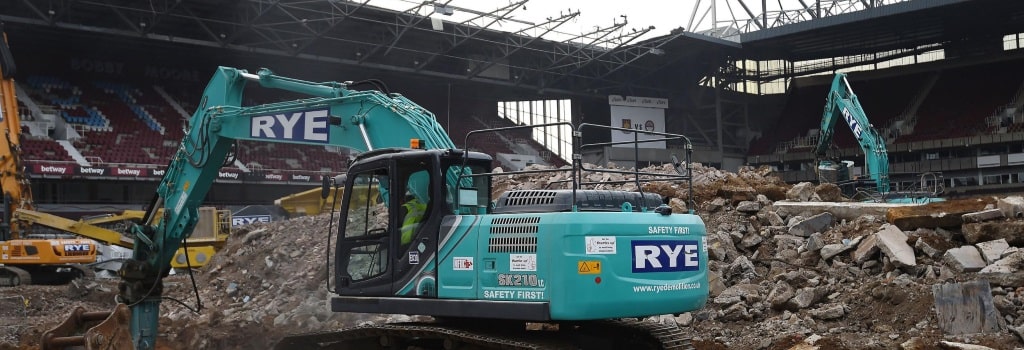
All good things have to come to an end, and the same unfortunately has to be said for football stadiums too. This article looks at the grounds which are soon to host their last match, the stadiums whose days are numbered and where fans will be watching their football from next.
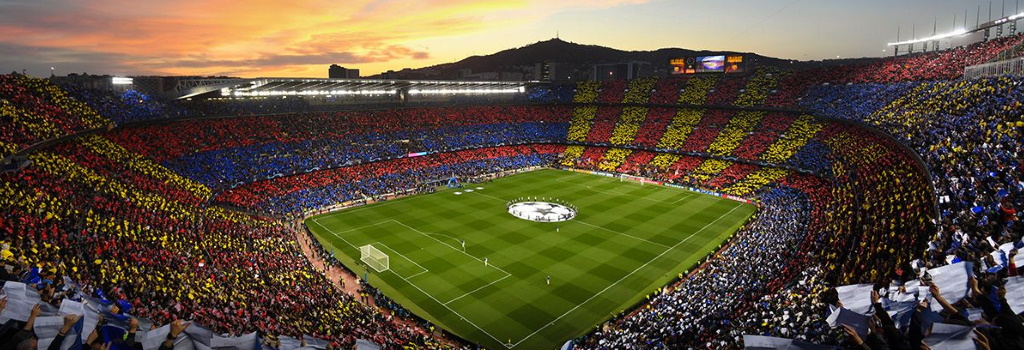
The 91 biggest football stadiums in Europe. From Manchester to Munich, Villa Park to Valencia - each one with a capacity over 40,000
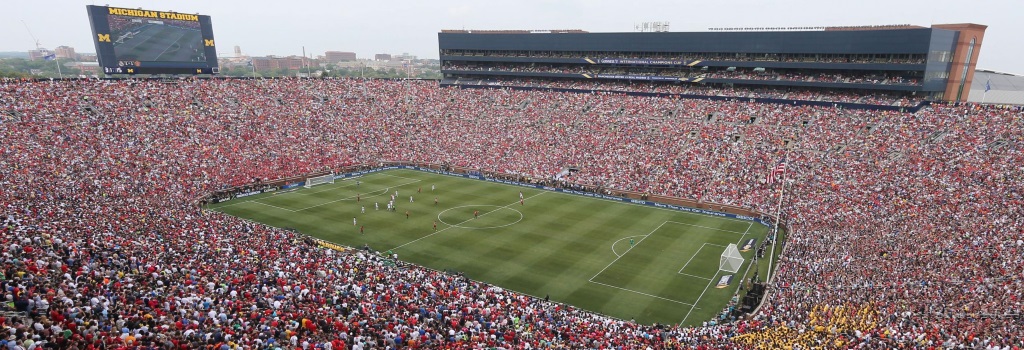
An in-depth look at the biggest football attendances ever recorded, from the 1950 World Cup to pre-season friendlies in the States and the Scottish ground with dozens of 100,000+ attendances