 Football Ground Map
Football Ground Map
Football Ground Map


The groundhopper community is one of the fastest-growing fan subcultures, with over 179,600 users registered on a major ground-mapping platform. It reports that over 33,800 grounds have been logged and that users have made over 8.5 million visits. This article aims to understand the who and the why of the phenomenon, the gaps in time and space, its significance to the culture of football, and how the act of geolocation enhances the knowledge of the sport for fans.
Though the ability to map your football journey stops you from using just scores and the one-dimensional chart, tracking the venues of your visited matches allows you to add extra depth to your journey.
What used to be a niche and solitary hobby, groundhopping is now a global phenomenon. Our site data reports over 179,600 users and more than 33,800 logged stadiums in a multitude of countries. In total, users have made over 8.5 million visits to documented grounds.
Groundhopping is the act of visiting different football stadiums regardless of which team is played, and has grown to become a phenomenon in itself. Recent data suggests that fans who've visited over 47 stadiums are an average user. With that many stadiums to visit, a lot of fans, both amateur and pro, map out ground visits and post reviews with photos to mark their visit.
Travel and cost logistics with potential satisfaction derived from the trip is the same mentally as betting. An odds calculator helps to visualise potential pay-offs from bets. Accumulators (acca) involve a collection of bets which reflect the same logistical risk as groundhopping. Mapping out a series of legs with an anticipated pay-off is the core to both betting and groundhopping.
The stadiums you visit help you value the versatility of the game. You learn to spot and admire the architectural features, standalone design, and arrangement of the seats that match a club's history or goals.
By keeping records of your visits, you discover the historically significant stadiums, the ones that have been recently modernised, and the ones that have a local rival. Along the same line, the database mapping analytics registered 8.5 million stadium visits, meaning many fans do this not just as a hobby, but as a means of understanding the sport's geography.
Fans also improve their planning, organisational and spatial skills, as the game is not limited to visiting your own team's ground. With travelling to different stadiums comes the responsibility of purchasing tickets, organising transportation, and navigating a new city. These challenges, like planning a multi-leg bet, require thought, some discipline, patience, and a certain degree of comfort with uncertainty.
The internal ambience of a stadium can vary in accordance with the available space and configuration. Smaller, lower-league venues may provide an experience where you feel closer to the game with a more intimate crowd, while in larger and more modern stadiums, the experience may feel more theatrical due to their sweeping stands and larger capacities.
Different venues allow you to recognise different ways in which your emotional state can be altered by the external environment. With different encounters, you also come to appreciate the various ways in which the different surroundings, the proximity to the pitch, the terrace design, the quality of the pitch, the steepness of the stands and other factors, determine how emotionally invested one feels.
You read venues almost like a map of fan culture, identifying how different venues also support different fan cultures with the layout, acoustics, and the design of the surrounding space, which in turn, sustain ritualistic collective fan activities.
Each venue you visit is a testimony to the surrounding community and the football club. cycle. Stadiums tell the tales of local history, identity, and the socioeconomic context as well. A rural non-league venue may reflect a grassroots heritage, and a rebuilt stadium in a large urban area may show how financial resources have transformed a club.
Over time, recording your visit in a stadium allows you to not only trace your own journey, but also the history of football in the different places you have visited.
Cross generations, groundhopping serves as an age-old connector. Lifers recommend unassuming grounds, provide context, and share knowledge on gems. Junior groundhoppers provide an informational routing and digital perspective through maps and social media. Both segments annotate football's evolving culture, how clubs' traditions reinvent, fans' identity, and stadiums take root in culture.
There's an odd similarity between planning a groundhop and placing an accumulator bet. An acca has multiple outcomes and carries a higher risk and reward. A groundhop leg is similar in cost and uncertainty.
There is always subjective value in trip planning and weighing top options. Consider fixture timing, transport costs, ticket prices, and experience value. It is akin to an odds calculator and simulated outcomes. However, financial payoff is absent. It is an investment in memories, achievement, and stories. There's a payoff in personal experience when a visited grounds list morphs into a unique, thoughtful, and geographically aware map.

23 interesting things to do to pass the time until the football season restarts
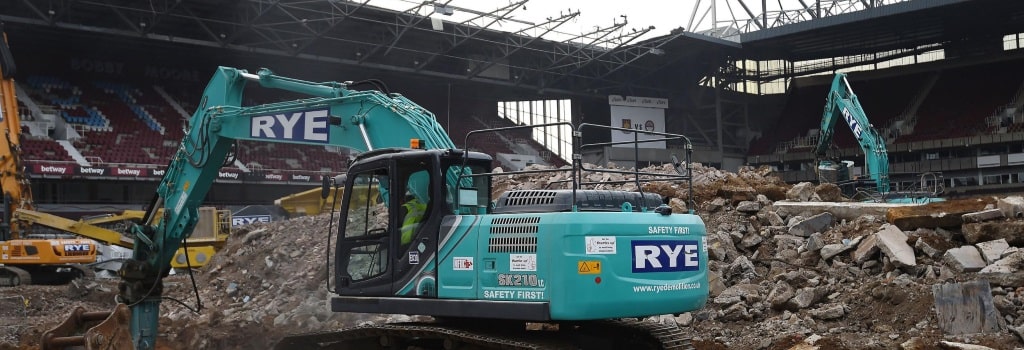
All good things have to come to an end, and the same unfortunately has to be said for football stadiums too. This article looks at the grounds which are soon to host their last match, the stadiums whose days are numbered and where fans will be watching their football from next.

The 91 biggest football stadiums in Europe. From Manchester to Munich, Villa Park to Valencia - each one with a capacity over 40,000

Taking my son to his first football match was one of the best experiences I've had as a father so far. I've written this article for Alex to read when he gets older.