 Football Ground Map
Football Ground Map
Football Ground Map

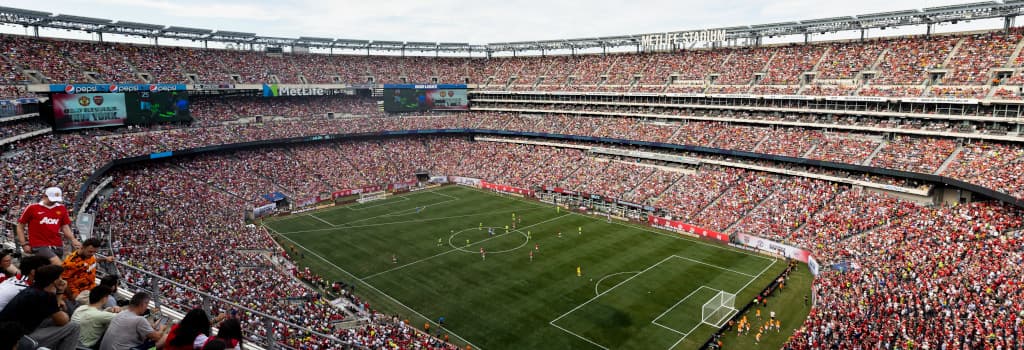
The 2026 World Cup final lands at MetLife Stadium in New Jersey on 19 July, when football's last two teams meet on its biggest stage. The ground usually holds 82,500 fans, but FIFA's wider pitch setup cuts final capacity to 78,576, attracting betting sites for this match configuration.
Below, the article weighs the bracket, the favourites, and the teams with the strongest case to reach New Jersey. Spain lead the numbers, Argentina own a clean route, France remain dangerous, and the real question is which contender can handle seven brutal matches before the final.
Met Life Stadium opened in 2010, after a build reported at roughly $1.6 billion, and it now serves as the shared NFL home of the New York Giants and New York Jets. The venue follows in the footsteps of Giants Stadium, which occupied the same Meadowlands site and played a central role in the 1994 World Cup — making the area a proven host for football's biggest moments. For football fans, that scale explains why it was chosen for the World Cup final.
During FIFA World Cup 2026, the venue is scheduled to host 8 matches, including 5 group stage games, a Round of 32 match, a Round of 16 match, and the final on 19 July, while wider host city preparations add context.
For tournament use, MetLife Stadium will be called New York New Jersey Stadium because FIFA sponsorship rules avoid commercial venue names. The ground sits in East Rutherford, NJ, about 10 miles west of Midtown Manhattan, which keeps the New York stadium label understandable for global visitors.
The usual MetLife Stadium capacity is 82,500, though the wider World Cup pitch setup lowers the final layout to 78,576. That detail matters because this will be the first US hosted World Cup final since the Rose Bowl staged the 1994 decider among World Cup venues 2026.
Spain have the strongest analytical case because their numbers separate them from the chasing pack. The Opta supercomputer ran 25,000 simulations, and Spain won 16.1% of them, the highest mark of any team, which makes World Cup predictions feel earned.
Their final probability is even more important than the trophy percentage. At 25.6%, Spain are the team most likely to reach MetLife Stadium, helped by their European champion status, deep midfield, calm possession game, and a group draw that looks manageable.
The main concern is how Spain handle a direct clash with France, especially if Kylian Mbappé attacks space behind their line. Still, their control, rhythm, and depth make them the single most likely team to be in New Jersey on 19 July, far from York City.
France sit just behind Spain because their tournament record carries real weight. Their 13% title chance is supported by World Cup wins in 1998 and 2018, plus a 2022 final appearance that confirmed how comfortable they are chasing the World Cup trophy.
Group I gives France a smoother start than many rivals, with Senegal, Iraq, and Norway standing in their way. That path should let them manage minutes, avoid early panic, and monitor New York pitch concerns before the tougher rounds arrive later.
Their biggest strength is the way individual quality fits together. Mbappé brings decisive speed, while Tchouaméni and Camavinga give control, pressure, and recovery power in midfield. France look like Spain's most likely final opponent if the bracket opens correctly.
Argentina enter as defending champions, and that experience still matters when tight matches turn emotional. Their biggest advantage, though, is structural, because FIFA's bracket design keeps them away from Spain until the final, giving them a cleaner road toward New Jersey.
That separation makes Spain vs Argentina the most natural prediction across major forecasting models. Argentina are not only riding past glory, because they have balance, tactical clarity, and a squad that already understands how to survive ugly knockout moments in a World Cup predictor.
Brazil remain the louder attacking threat, with the deepest forward options in CONMEBOL and enough individual quality to break any match open. Yet Argentina feel more reliable across a full tournament, making them the more probable South American finalist at MetLife.
England belong in the top group with Spain, France, Portugal, Argentina, Brazil, and Germany. Their squad has enough talent to beat anyone, while 2 straight Euro final appearances support England's World Cup chances in the latest World Cup table projections.
The bracket also gives England a real advantage. They cannot meet Spain or Argentina until the semifinals, and France are blocked until the final, which removes several early nightmare scenarios and makes their path feel more stable than usual.
Thomas Tuchel adds the unknown factor. His tournament management could sharpen England in close matches, especially when control matters late. Even so, the realistic verdict is a semifinal run, with a MetLife appearance possible if they avoid a quarterfinal slip.
Morocco already proved that the old limits around African teams can be broken. At the 2022 World Cup, they entered at 200 to 1 to win and still became the first African nation ever to reach the semifinals.
That run worked because Morocco were not trying to outplay everyone in the same way. They defended with patience, moved quickly on the counter, and stayed calm against bigger names, which made every opponent feel pressure after wasting chances.
If Morocco repeat that structure and find 1 more win, the story changes completely. Reaching New Jersey on 19 July would no longer feel like a miracle, because their 2022 run already showed they can handle elite tournament pressure.
Portugal have a route that feels open enough to matter. Group K brings DR Congo, Uzbekistan, and Colombia, which gives them a realistic chance to finish strongly, control their early path, and enter the knockout rounds with confidence instead of panic.
The bigger story is Cristiano Ronaldo's likely final World Cup. That emotional weight can sharpen the squad, because every match carries legacy, attention, and pressure. For Portugal, the challenge is turning that feeling into control rather than rushing moments.
They also have enough individual quality to beat anyone on a given night. Portugal are not only about Ronaldo now, because the squad has technical midfielders, quick attackers, and enough depth to survive the longer route through the expanded tournament.
Germany remain the outsider that nobody should want in their section of the bracket. They are structured, clinical, and built around habits that usually travel well in knockout football, especially when matches become tense and small mistakes decide everything.
No European team outside the top 2026 World Cup favorites carries a better tournament memory at this level. Even when Germany look less fashionable than Spain, France, or England, their history gives them a weight that makes every knockout opponent uncomfortable.
That is why Germany stand as the best dark horse pick to gatecrash the MetLife final. They may not lead the predictions, but their structure, experience, and cold finishing give them the exact profile needed to break a clean bracket.
The clearest final prediction is Spain vs Argentina, with both teams dominating separate sides of the draw. Spain carry the strongest statistical profile, while Argentina benefit from a clean bracket path that keeps them away from Spain until the match that decides the World Cup trophy.
The 25,000 simulation model still keeps Spain and France as the strongest individual finalists, which matters when reading World Cup predictions carefully. France are the clear alternative if Argentina stumble, especially because their knockout record and Mbappé-led attack can break any bracket at speed.
England look like the tournament's third best side, but their realistic ceiling remains the semifinal. They have depth, structure, and a useful path, yet reaching New York New Jersey Stadium may also bring MetLife travel concerns around the final.
Germany are the best dark horse to follow through the Mundial because their tournament habits fit pressure football. When the final whistle sounds on 19 July, New York New Jersey Stadium should host Spain vs Argentina, the strongest answer from the 2026 World Cup favorites.
To make the final race clearer, this World Cup table brings together every contender from the original prediction set. It compares each team's simulated chance of reaching the final, their bracket half, and the biggest opponent likely to block their route to MetLife.
| Team | Simulated Final Probability and Bracket Half | Biggest Threat on the Road |
|---|---|---|
| Spain | 25.6%, Bracket Half A | France in a potential semifinal |
| France | ~18%, Bracket Half A | Spain |
| Argentina | ~15%, Bracket Half B | Brazil |
| Brazil | ~12%, Bracket Half B | Argentina |
| England | ~8%, Bracket Half A | France or Spain |
| Germany | ~5%, Bracket Half B | Argentina |
| Portugal | ~4%, Bracket Half B | Argentina |
| Morocco | ~3%, Bracket Half B | Brazil |
Probabilities are based on Opta's 25,000 pre-tournament simulations. Bracket half refers to each team's projected pathway toward the MetLife final.
MetLife Stadium gives the 2026 final a stage built for scale, pressure, and global attention. Still, the venue only tells part of the story, because the real answer depends on bracket paths, squad depth, knockout control, and nerves across World Cup 2026 stadiums.
Spain remains the strongest statistical pick, Argentina offers the cleanest final matchup, and France sit close enough to change everything. England, Germany, Portugal, Brazil, and Morocco all matter, but Spain vs Argentina still feels like the clearest prediction.
Bracket half shows which side of the knockout path a team occupies, helping explain why strong rivals may avoid each other.
Yes, because compact teams can survive tight games through set pieces, counter-attacks, disciplined defending, and strong goalkeeper performances with late saves.
Tactical flexibility matters most, since knockout games often force teams to defend deeper, press higher, or adjust without much warning.
It makes it harder because it adds another knockout round, so favorites face more fatigue, travel, suspensions, and extra risk from one bad tactical matchup.

23 interesting things to do to pass the time until the football season restarts
An in-depth look at the biggest football attendances ever recorded, from the 1950 World Cup to pre-season friendlies in the States and the Scottish ground with dozens of 100,000+ attendances

Tony Incenzo has been to over 2,000 football grounds - is he the world's barmiest football fan? Read about his love for Non-League football and groundhopping obsession, including watching a match in prison!

Taking my son to his first football match was one of the best experiences I've had as a father so far. I've written this article for Alex to read when he gets older.