 Football Ground Map
Football Ground Map
Football Ground Map


The 2026 World Cup across Canada, the United States, and Mexico is less of a cohesive tournament and more of a multi-climatic logistics war played out on sixteen separate experiments. While fans fixate on travel schedules and squad depth, the actual outcomes are being decided beneath the studs. FIFA’s multi-million-dollar engineering campaign to standardize North American pitches has revealed a striking truth: you can slice the grass down to the millimeter, but you cannot entirely erase geography. The tournament is a system-wide engineering battle where a ball's roll can feel like a slick natural carpet in one time zone and sticky Velcro in the next.
To survive the vast territorial expanse of this tournament, turf scientists from Michigan State and the University of Tennessee had to split the entire event into two distinct biological categories. Warm-weather venues like Monterrey, Guadalajara, and Miami rely on 100% Bermudagrass to withstand brutal heat radiation. Meanwhile, cooler northern regions and enclosed domes use a specific hybrid cocktail: 84% Kentucky bluegrass blended with 16% perennial ryegrass, grown over plastic sheeting at specialized turf farms and hauled in refrigerated trucks.
The difference in how these surfaces play is immediate. Bermudagrass provides high rotational resistance and can hold its shape under high heat, but it behaves completely differently than the bluegrass-rye mix stitched with synthetic fibers used in the converted NFL stadiums. Players have already noted the variation, with some describing temporary natural sod laid over concrete bases as feeling like a trampoline. When a team transitions from the high-altitude, heat-stressed natural grass of Estadio Azteca to a heavy sand-and-gravel modular installation in New Jersey, they should be altering their entire mechanical approach to the game.
The logistical nightmare centers on the indoor, domed venues like Atlanta, Vancouver, and Dallas. These massive stadiums were never built for living ecosystems. To keep the temporary sod pristine without natural sunlight, engineers are forced to suspend massive, pink LED grow-light structures directly from the stadium ceilings.
It is a bizarre, surreal environment that creates distinct microclimates inside the bowls. The grass must sit on top of a multilayered system featuring twelve inches of specialized sand and complex vacuum-ventilation layers to extract moisture. If the stadium's humidity levels shift slightly, or if the hybrid fibers are stitched too densely, the pitch begins to sap the energy of high-pressing teams. Ball roll thresholds are tested using standardized ramps, with the target speed fixed between four and ten meters. But if a pitch leans toward the sticky side of that spectrum, possession-heavy teams lose their transition edge, dragging down high-scoring expectations into grinding tactical stalemates.
For the analytical side of the fan base, this turf variance represents the ultimate under-the-radar market mover. Traditional form guides mean very little when a slick, fast hybrid surface suddenly switches to a thick, warm-season grass that forces international squads to scramble for entirely different boot configurations mid-tournament.
This mechanical volatility is exactly why savvy bettors on the FIFA World Cup look closely at under-the-radar variables when analyzing match lines and totals. A stadium with high internal humidity and a newly laid, sand-heavy rootzone inherently slows down fast, wing-dependent attacks. On the flip side, a seamless, daily-mowed bluegrass hybrid pitch rewards technical ball-circulation teams who can exploit a predictable bounce. Watching how a squad adjusts to these subtle surface friction changes in the opening fifteen minutes offers a far sharper reading of a match than any historical head-to-head metric.
Ultimately, the team that lifts the trophy won't just be the most talented; it will be the most adaptable to the changing soil beneath them. The engineering feat behind these sixteen pitches is historic, but football remains a game of friction. A team can possess world-class talent, but if their technical style falls off the performance cliff because they can't handle the transition from high-altitude heat to a damp indoor modular tray, the logistics will break them. Everything else is just pre-match tactical theory until the boots hit the grass.
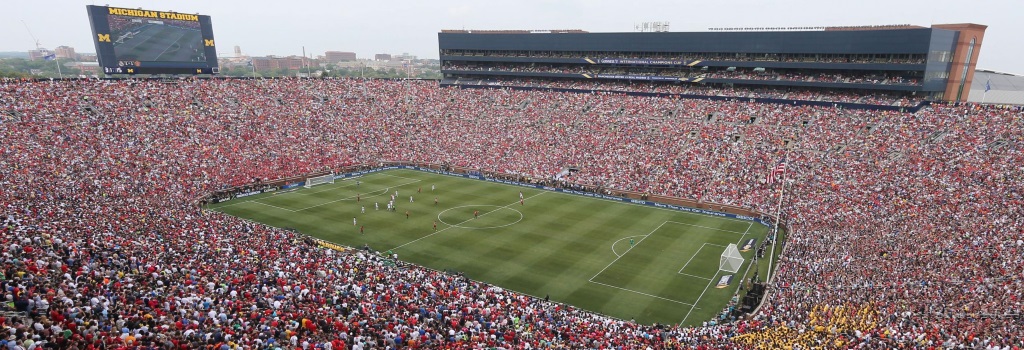
An in-depth look at the biggest football attendances ever recorded, from the 1950 World Cup to pre-season friendlies in the States and the Scottish ground with dozens of 100,000+ attendances

23 interesting things to do to pass the time until the football season restarts
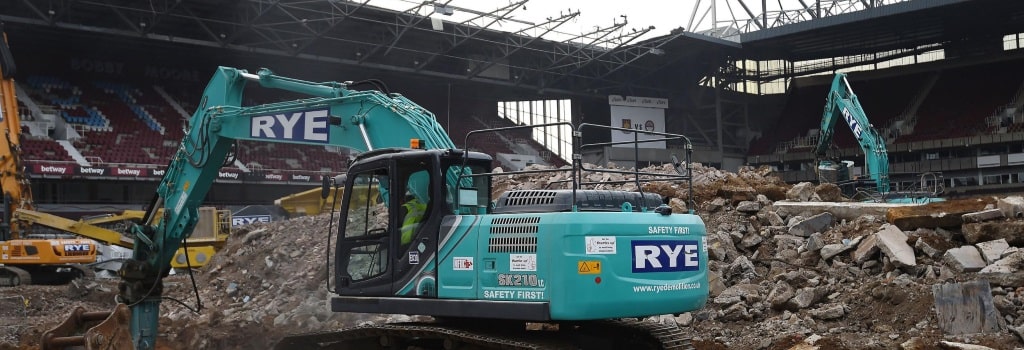
All good things have to come to an end, and the same unfortunately has to be said for football stadiums too. This article looks at the grounds which are soon to host their last match, the stadiums whose days are numbered and where fans will be watching their football from next.

My daughter's first ever football match - Orlando City v Atlanta United, August 2019. Written for Izzy to read when she gets old enough. Vamos Orlando