 Football Ground Map
Football Ground Map
Football Ground Map

In a loft in Sidcup, Bill Robinson's family found a case full of Charlton Athletic board minutes and gate receipt books. Bill had died of work-related myeloma in 2007. His niece, Margaret Double, donated the papers to the Charlton Athletic Museum in April 2018. The papers told the story of one of British football's quieter side hustles: the football clubs that ran their own gambling businesses out of the building next to the ground. Bill was an industrial radiographer at Harvey's in Charlton. Around all of that, he had a second life inside the club. He was known as Bingo Bill.
In the 1960s, Bill ran the bingo at the Valley club. He worked alongside Ray Donn, who ran the club itself. The Valley club was the social side of the ground, not the stadium itself but the building attached to it. It was where supporters met before kick-off, where players' families sat, and where the club brought in revenue that did not come through the turnstile.
Bingo at a football ground is the kind of detail that sounds invented now. It was not. Bill was a friend of Peter Croker, the 1947 FA Cup winner, and an informal financial adviser to Charlton players. He travelled with the team. On the rare occasions Charlton flew to away matches, he would take the empty team coach to the airport and meet the players there. Alan Curbishley visited him in hospital before he died. Most of the players from his era turned up at the funeral.
When the Charlton Athletic Museum acquired the board minutes, they were filling in a piece of the club's bookkeeping that had been missing for decades.
The other side of football's relationship with gambling started a long way from any boardroom. In February 1923, John Moores, Colin Askham, and Bill Hughes printed 4,000 Littlewoods coupons and handed them out outside Manchester United's Old Trafford ground. Manchester United were a Second Division side. The coupons asked punters to predict whether a list of matches would end in a home win, away win, or draw. The idea was not theirs. A few years earlier, John Jervis Barnard, a Birmingham businessman, had put together the same basic competition. But it was the Liverpool friends who turned it into a national habit.
By 1930, Moores was a millionaire. Vernon Sangster started Vernons in Liverpool in 1925. Zetters opened in London in 1933. By the end of the Second World War, the pools accounted for around 15 million postal packets every week, and by the 1950s, the industry employed over 100,000 people. The pools companies got rich; the clubs supplied the fixtures and got nothing.
That fact ended up in front of a judge. In Football League Ltd v Littlewoods Pools Ltd [1959] 1 Ch 637, the League sued, arguing Littlewoods could not publish the fixture program without paying for it. The League lost. The pools companies kept the fixtures. The clubs stayed out of the gambling business their own product had built.
The Betting and Gaming Act 1960 came into effect on 1 January 1961. It legalized commercial bingo halls, permitted gaming machines on members-only club premises, and gave supporters' associations a clear route to run bingo nights, gaming machines, lotteries, and prize draws on club property. The Act treated those clubs as exactly the kind of small-scale, members-only environment where gambling was no longer a problem to police.
Over the next two decades, hundreds of British clubs operated some version of this. The supporters' association, usually a separate legal entity from the football club itself, with its own committee, its own building, and its own books, became a small-business operator. Bingo on a Tuesday, fruit machines along the back wall of the social club, a weekly lottery with the draw made at half-time. The money raised paid for floodlights, training pitches, club minibuses, and, in the lower divisions, the difference between a fourth-choice goalkeeper and a third. The Valley club was the version that happened to be written down. Most were not.
By the time the boom faded in the 1990s, the same activity had started to move off the high street and onto computers. The licensed casino business that supporters used to walk into on a Tuesday now lives behind a screen. The everyday entry point for an adult in the UK is one of the websites that compare online casinos in the UK and list which operators are licensed by the UK Gambling Commission. The Tuesday-night club bingo session in 1972 and a kitchen-table login in 2026 are different forms of the same regulated, age-gated transaction.
Across the border, one Scottish club had already worked out a different answer. In 1956, Dundee United set up its own pools competition to fund ground improvements at Tannadice Park. The operation was called Taypools. It became the template for dozens of similar club-run pools across British football. These were clubs that had decided the income belonged to the team, not to a merchant in Liverpool.
Money from Taypools and its imitators paid for stands, training facilities, and, eventually, transfer fees. The model worked because it bypassed the commercial pools companies entirely: punters bought their coupon from the club, the club paid out the prizes, and the rest stayed in the accounts.
After the Ibrox disaster of 1971, the gambling-into-football money pipeline got a second formal channel. The Football Trust was established to fund ground improvements, and from 1975 onward, 2.5 per cent of every pools coupon entry fee was diverted to it. By 1978, roughly £8 million a year was flowing from the pools companies to the Trust, going straight back into the grounds that had supplied the fixture list in the first place. For more than two decades, gambling money quietly rebuilt British football's infrastructure.
The on-ground gambling businesses are mostly gone. The licensing regime tightened. The bingo audience aged out. Most of the supporters' associations of the 1970s disbanded or merged into modern foundations. The few survivors look different. The Wolves Lottery, which raises around £280,000 a year, sends most of its proceeds to local charities and the Royal Wolverhampton NHS Trust rather than back into the club. Club 3000 Bingo on Chester Road in Old Trafford is the largest dedicated bingo hall in Manchester. It is not run by United, but it sits within walking distance of the stadium that hosted the first Littlewoods coupons.
You would not piece all of that together from a modern matchday. The bingo books are gone. The pools coupons are mostly gone. But the names, the Valley club, Bingo Bill, Taypools, the Football Trust, the supporters' association lottery, are sitting in club museums, law reports, and the back rooms of social clubs, waiting for someone to read them.
All good things have to come to an end, and the same unfortunately has to be said for football stadiums too. This article looks at the grounds which are soon to host their last match, the stadiums whose days are numbered and where fans will be watching their football from next.
Tony Incenzo has been to over 2,000 football grounds - is he the world's barmiest football fan? Read about his love for Non-League football and groundhopping obsession, including watching a match in prison!
My daughter's first ever football match - Orlando City v Atlanta United, August 2019. Written for Izzy to read when she gets old enough. Vamos Orlando
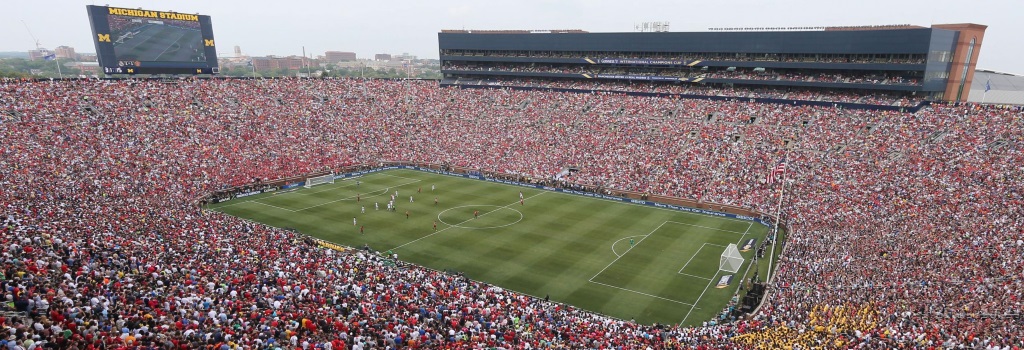
An in-depth look at the biggest football attendances ever recorded, from the 1950 World Cup to pre-season friendlies in the States and the Scottish ground with dozens of 100,000+ attendances