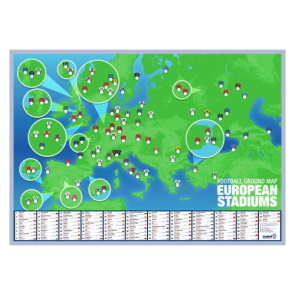
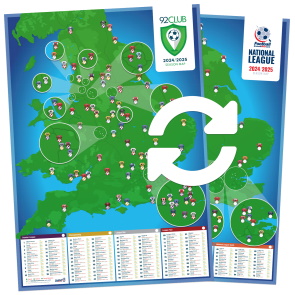
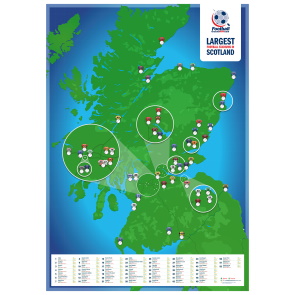
 Football Ground Map
Football Ground Map
Football Ground Map


Few betting systems have the staying power of Martingale. It's been around since at least eighteenth-century France, it gets rediscovered by every new generation of casino players, and it sounds so reasonable on paper that smart people keep trying it. Lose a hand, double the next bet. Lose again, double again. Eventually a win lands and recovers everything plus a small profit. The maths looks airtight. The trouble is that the maths is only airtight under conditions that no real casino - online or land-based - actually provides. The gap between the theory and what happens at the table is where every Martingale player eventually meets their bankroll.
The Martingale assumption is that the player can always double the bet. In practice, two constraints prevent that. First, every casino sets a maximum bet on every table - typically a few hundred times the minimum for low-stakes games. Second, every player has a finite bankroll. Both ceilings get hit much faster than most players intuit, because doubling grows numbers explosively.
The table below shows what happens to a Martingale player starting at £10 per bet, assuming each loss is followed by a doubled stake.
| Loss number | Bet required | Total staked so far | Net result if next bet wins |
|---|---|---|---|
| 1 | £10 | £10 | +£10 profit |
| 2 | £20 | £30 | +£10 profit |
| 3 | £40 | £70 | +£10 profit |
| 5 | £160 | £310 | +£10 profit |
| 7 | £640 | £1,270 | +£10 profit |
| 9 | £2,560 | £5,110 | +£10 profit |
| 10 | £5,120 | £10,230 | Likely above table limit |
Notice the pattern: by loss number 7, the player needs £640 on a single bet to recover a £10 starting stake. By loss number 10, the cumulative outlay is over £10,000 - and many roulette tables would already have refused the bet several rounds earlier. Seven losses in a row sounds rare. Over a long session of even-money bets, it isn't.
Most players underestimate how often long losing streaks actually happen. On European roulette, the probability of red winning is about 48.6% (the green zero is what gives the house its edge). The probability of seven reds in a row is roughly 1 in 168. That sounds reassuringly rare - until you remember that a typical session involves dozens of betting opportunities, and over a few hours or several sessions, that 1-in-168 event becomes a near-certainty rather than a freak result. A few uncomfortable numbers worth keeping in mind:
Casino operators didn't invent table limits to be cruel. The limits exist precisely because they neutralise Martingale and its variants. A casino that allowed unlimited doubling against a player with unlimited bankroll would, mathematically, lose money on even-money bets in the long run. The combination of a maximum bet and a house edge ensures the casino wins, regardless of which system the player imports from the internet.
Table-limit awareness used to be the preserve of regulars who'd run Martingale enough times to feel the wall. These days, any licensed UK-facing operator publishes both the minimum and maximum stake on every game in the lobby - it's the same panel where return-to-player figures sit. Independent guides and review sites covering the UK market, including resources such as play fortunica casino, often pull these figures together so players can compare stake ceilings across operators before they sit down. That kind of transparency is useful for Martingale players in a specific way: a quick glance at the table ceiling tells you exactly how many doublings your bankroll can theoretically survive, which is almost always fewer than feels safe before the session starts.
The misleading part of Martingale is how well it works for most of the time. A player can win every session for weeks, building confidence in the system. Each win produces a small, steady profit - £10 here, £10 there - until a single bad run wipes out everything accumulated and then some.
The expected outcome of a Martingale session, when modelled honestly, is:
If the goal is long-term enjoyment of casino play, the realistic answer isn't a betting system. It's a session approach: a budget set in advance, a time limit, games with the lowest possible house edge (blackjack with proper strategy, certain video poker variants), and the discipline to stop when the budget is spent or the time is up. None of this guarantees a win. It does guarantee that the experience stays within a known cost. Martingale promises the opposite - guaranteed wins at unknown cost - and the unknown cost is always larger than the player thought it could be.

23 interesting things to do to pass the time until the football season restarts

The 91 biggest football stadiums in Europe. From Manchester to Munich, Villa Park to Valencia - each one with a capacity over 40,000

Taking my son to his first football match was one of the best experiences I've had as a father so far. I've written this article for Alex to read when he gets older.

Tony Incenzo has been to over 2,000 football grounds - is he the world's barmiest football fan? Read about his love for Non-League football and groundhopping obsession, including watching a match in prison!