 Football Ground Map
Football Ground Map
Football Ground Map


A football forecast is no longer a mere guess based on the table and recent form determined "by eye." Today it is built using xG, shots, chance quality, fixture load, and squad data. That's why interest in mathematical prediction today is growing. Fans want to understand where the numbers in a forecast come from and where the illusion of control lies. Data does help, but only if you look past the pretty win percentage to see the logic of the model and its limits.
At the core is not a single formula, but a combination of statistics, historical samples, and algorithms. A system tracks possession, chances allowed, home and away performance, rest days between matches, absences, and the team trends over a longer stretch. It then compares current indicators with past seasons and similar games, after which the model estimates the probability of an outcome or total. The more accurately tournaments, styles, and team levels are separated, the lower the risk of getting a result that looks convincing but says little.
The main strength of these systems is cold calculation without club bias or the habit of overrating the last match. A machine can scan data sets in seconds that a person could not process manually in a lifetime. Usually, they:
That is why numbers matter, acting not as a promise of magic, but as a way to filter out weak ideas early.
If a database has gaps in lineups, match events, or the tempo of a specific league, the final estimate becomes distorted before the calculation even starts. Football also includes factors that are hard to turn into tables: a late injury, sudden weather changes, tension inside the squad, fatigue after travel, or unusual motivation. There is another trap as well: a model almost always inherits the creator's bias, because that person decides which variables deserve more weight.
A prediction should be treated as a filter for selecting options, not as a "place bet" button. First, it helps to understand what exactly the model measures, what sample it was tested on, and how often its inputs are updated. After that, the conclusion should be checked against the context of the round and fresh team news.
That makes it easier not to mistake a convenient number for a guarantee.
Data in football predictions can be trusted, as long as one simple point remains clear: it measures probabilities, not the end of matchday chaos. An advanced model helps you look at the game more calmly, but it does not remove the risk of being wrong. The most practical approach is to combine numbers, context, and discipline instead of trusting a prediction blindly.
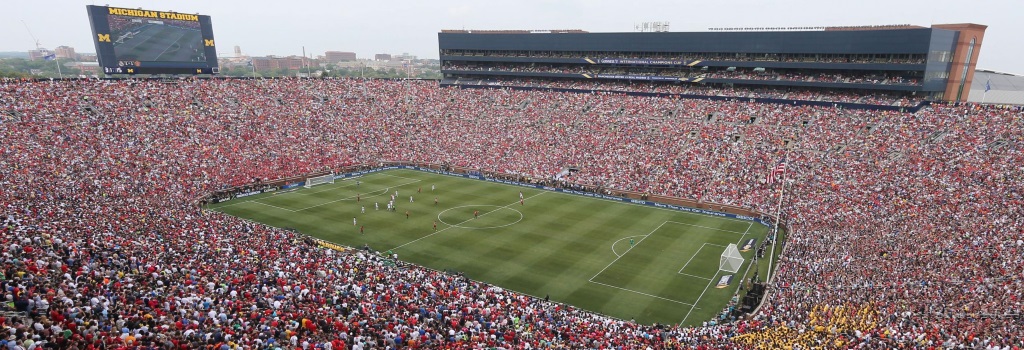
An in-depth look at the biggest football attendances ever recorded, from the 1950 World Cup to pre-season friendlies in the States and the Scottish ground with dozens of 100,000+ attendances

Tony Incenzo has been to over 2,000 football grounds - is he the world's barmiest football fan? Read about his love for Non-League football and groundhopping obsession, including watching a match in prison!

My daughter's first ever football match - Orlando City v Atlanta United, August 2019. Written for Izzy to read when she gets old enough. Vamos Orlando
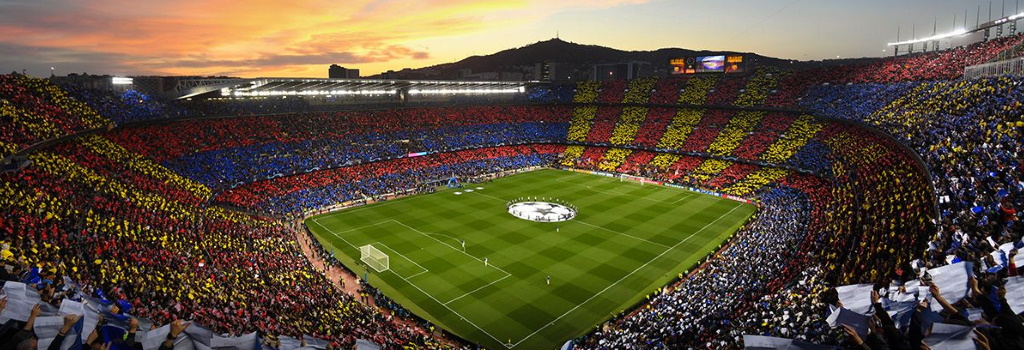
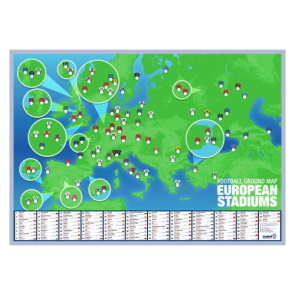
The 91 biggest football stadiums in Europe. From Manchester to Munich, Villa Park to Valencia - each one with a capacity over 40,000