 Football Ground Map
Football Ground Map
Football Ground Map


In football betting, the difference between a home match and an away match is not just about the crowd. Travel distance, stadium location, kick-off time, transport conditions, and recovery windows can all shape how a team performs. Bettors often look at league position, recent form, injuries, and head-to-head records, but the physical and tactical cost of playing away can be just as relevant.
This is why travel analysis has become part of modern betting research. A bettor comparing markets through tools, statistics, or mobile access such as Coldbet APK should not treat every away fixture in the same way. A short regional trip and a long cross-country journey can create very different match conditions, even when the teams look similar on paper.
Away distance affects more than comfort. It can influence preparation time, sleep patterns, recovery, player sharpness, and tactical choices. In domestic football, some teams travel by coach for several hours before a match. Others may need flights, hotel stays, or complex transfers from airport to stadium. Each layer adds disruption.
For bettors, the key question is not simply "How far is the away team travelling?" The better question is: "Does this distance create a measurable disadvantage in this specific match?" A long trip before a Saturday afternoon fixture may matter less if the team had a full week of rest. The same distance after a midweek match may have a stronger effect.
Lower-league football can be especially sensitive to travel. Clubs may have smaller squads, fewer recovery resources, and less flexible travel arrangements. A long away day in these divisions can affect pressing intensity, concentration in the final 20 minutes, and the ability to rotate players.
Home advantage is often explained through crowd noise, referee pressure, and familiarity with the pitch. These factors matter, but geography is part of the equation too. A club playing at home avoids the journey, sleeps in normal conditions, follows its usual meal schedule, and warms up in a known environment.
The away side must adjust. Even small details can matter: dressing room layout, pitch dimensions, surface speed, wind exposure, stadium access, and the distance from the stand to the pitch. Some grounds create pressure because supporters are close to the action. Others are difficult because of weather, altitude, or surface quality.
When analysing bets, home advantage should not be applied as a fixed number. It should be weighed against travel burden, squad depth, style of play, and match importance. A team that defends deep may cope better away from home than a team that depends on coordinated pressing.
Different styles react to travel in different ways. High-pressing teams need timing, energy, and repeated sprints. If travel reduces intensity, their defensive structure can break. A team that normally wins the ball high may sit deeper away from home after a long journey, which can change the value of match result, goal, and corner markets.
Possession-based teams may also be affected, but in another way. Travel fatigue can reduce passing tempo and movement between lines. This does not always lead to defeat, but it may reduce expected goals or slow the match. Bettors looking at totals markets should consider whether the away team's attacking rhythm is likely to suffer.
Direct teams may be less vulnerable to travel disruption. They can rely on set pieces, second balls, and compact defending. However, if the trip is long and the opponent applies pressure, defensive errors can increase late in the match.
Distance alone is not enough. The match calendar decides how important it becomes. A 300-kilometre trip after six days of rest is different from the same trip after a cup tie, European fixture, or congested holiday schedule.
Bettors should check three things. First, how many days of rest did the away team have? Second, did they travel recently for another match? Third, do they have an important fixture coming next? If a team faces a long away trip before a derby or promotion clash, the manager may rotate players or adopt a risk-limited approach.
Kick-off time also matters. Early kick-offs can force overnight travel or early departures. Evening matches may affect recovery after the game, especially if the squad returns late. These details are not always reflected fully in betting odds.
Travel distance should not be overused as an explanation. Elite clubs often manage travel well. They have larger squads, medical staff, charter flights, nutrition planning, and recovery protocols. In these cases, distance may have less impact than injuries, tactics, or motivation.
Distance can also be less relevant in derby matches or regional fixtures. The away team may travel only a short distance, and its supporters may attend in large numbers. In these matches, the emotional intensity can reduce the normal home-away gap.
There are also teams with strong away identities. Some clubs are built to counterattack, defend compactly, and handle pressure. Their away records may remain stable even across long distances. Bettors should compare travel theory with actual performance data.
A practical betting model should treat travel as one factor, not a single reason to bet. Start with the basic distance between clubs, then add context: rest days, recent fixtures, squad rotation, transport complexity, pitch type, weather, and the home team's stadium profile.
Useful questions include: Does the away team usually concede late after long trips? Does its pressing drop away from home? Does the home side start matches strongly at its stadium? Are there signs of rotation? Is the match in a league where travel resources are limited?
This approach is especially useful for match result, double chance, under/over goals, both teams to score, corners, and second-half markets. Travel fatigue may not decide the winner, but it can influence tempo, risk, and late-game control.
Away distance changes football betting predictions because it changes preparation, rhythm, and match conditions. The effect is strongest when long travel combines with short rest, weak squad depth, difficult stadium conditions, or a demanding tactical style. It is weaker when teams are well-resourced, rested, or built to play away from home.
For serious bettors, the value lies in detail. Distance should not replace form analysis, injury checks, or tactical study. But when used correctly, it can explain why two similar away fixtures may carry very different levels of risk.

Tony Incenzo has been to over 2,000 football grounds - is he the world's barmiest football fan? Read about his love for Non-League football and groundhopping obsession, including watching a match in prison!

The 91 biggest football stadiums in Europe. From Manchester to Munich, Villa Park to Valencia - each one with a capacity over 40,000

Taking my son to his first football match was one of the best experiences I've had as a father so far. I've written this article for Alex to read when he gets older.
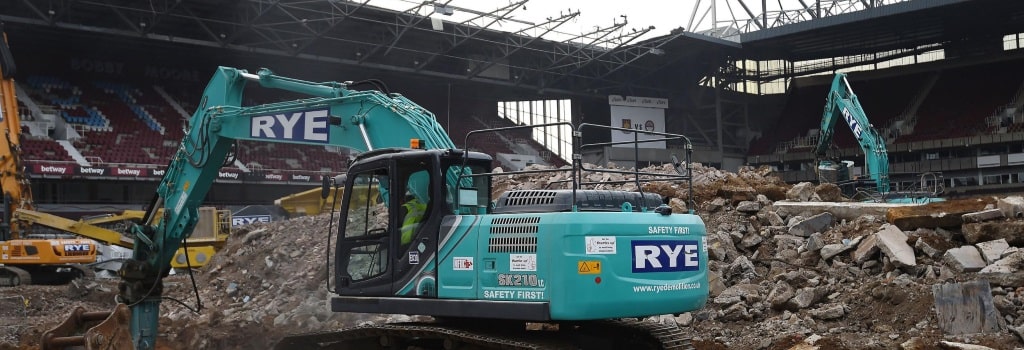
All good things have to come to an end, and the same unfortunately has to be said for football stadiums too. This article looks at the grounds which are soon to host their last match, the stadiums whose days are numbered and where fans will be watching their football from next.