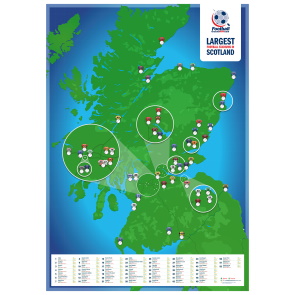
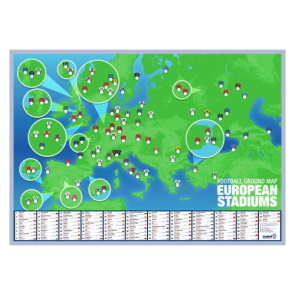
 Football Ground Map
Football Ground Map
Football Ground Map


Football is followed by roughly four billion people worldwide, making it the most popular sport on the planet. With global tournaments organized by FIFA attracting audiences in the billions and domestic leagues broadcast into nearly every home with a screen, match coverage has become the sport's central nervous system. Where the cameras go, technology follows.
This article, written in partnership with Tribuna.com, explores three areas where football now enjoys technological advantages that fans could scarcely have imagined even a decade ago: Video Assistant Referee (VAR), advanced data analytics, and artificial intelligence. Each has reshaped how the game is played, judged, and consumed; sometimes brilliantly, sometimes controversially.
Video Assistant Referee technology was first officially introduced at a FIFA tournament during the FIFA 2018 World Cup, following earlier trials in 2016-17. Domestic leagues such as the Premier League adopted it in the 2019/20 season. The core idea was simple: minimize "clear and obvious errors" in four situations: goals, penalties, direct red cards, and mistaken identity.
The system relies on multiple synchronized camera feeds, calibrated offside lines, and communication between on-field officials and a centralized review hub. In some leagues, semi-automated offside technology (SAOT) now uses limb-tracking algorithms and 3D modeling to detect offside positions within centimeters.
Yet, in the 2025/26 season across Europe's top five leagues, controversy has hardly diminished. In England, debates erupted over marginal offside calls decided by millimeter-level limb detection, with managers questioning whether such precision aligns with the "spirit of the game." In Spain's La Liga, handball interpretations following VAR reviews have sparked heated post-match reactions, particularly in tightly contested title races.
In Italy's Serie A, extended VAR checks in high-profile fixtures have drawn criticism for disrupting tempo. Meanwhile, Germany's Bundesliga and France's Ligue 1 have experimented with greater transparency, including referee audio explanations broadcast in-stadium, an attempt to rebuild trust.
Supporters argue VAR has significantly reduced blatant officiating errors. Statistical reviews from domestic competitions show measurable declines in incorrect penalty and red-card decisions compared to pre-2019 seasons. Critics counter that while accuracy has improved, subjectivity remains, particularly in handball and "clear and obvious" thresholds.
| VAR Feature | Expectation (Original Goal) | Reality in 2025/26 Season |
|---|---|---|
| Offside decisions | Clear, indisputable calls using semi-automated technology | Extremely precise, but millimeter-level calls spark controversy |
| Penalty calls | Reduce wrong penalties and red cards | Fewer errors, but subjective handball interpretations still disputed |
| Red card decisions | Remove wrongful dismissals | Generally accurate but long reviews disrupt match flow |
| Match flow | Minimal interruption | Frequent pauses affect tempo, especially in tight games |
Long before artificial intelligence became a buzzword, football clubs were already mining data. The watershed moment came in the early 2010s with the rise of expected goals (xG) models, quantifying the probability of scoring from specific shot locations and situations. By 2016-17, elite clubs were integrating tracking data, capturing every sprint, press, and positional adjustment.
Companies such as Stats Perform (through its Opta data division) and Second Spectrum expanded the analytical frontier. Second Spectrum, now embedded in several top competitions, provides optical tracking systems that convert video feeds into spatial datasets in real time.
In the 2025/26 season, the Premier League deepened its collaboration with Microsoft to enhance cloud-based analytics and broadcast integrations. Meanwhile, wearable technology from Catapult Sports has become standard at elite clubs, measuring player load, acceleration profiles, and neuromuscular fatigue. These metrics feed into injury-prevention models that influence training intensity and rotation decisions.
Recruitment has also transformed. Clubs increasingly deploy multi-variable predictive models combining age curves, physical outputs, passing networks, and contextual league strength to identify undervalued talent. The concept of "data-driven scouting" is no longer niche; it is infrastructure. Tools and platforms that deliver live insights to fans-such as real-time football stats and match tracking apps are becoming part of this ecosystem as well.
Broadcasts reflect this analytical boom. Viewers now encounter live pressing-intensity graphics, possession value models, and automated tactical visualizations during matches. For fans accustomed to basic possession percentages ten years ago, today's layered metrics feel cinematic.
And yet, data has subtly changed tactics themselves. High-pressing systems, once stylistic gambles, are now meticulously optimized through spatial modeling. Set pieces are choreographed using probabilistic simulations. Football's unpredictability remains, but preparation has become hyper-rational.
If data analytics built the foundation, artificial intelligence is building the superstructure. Since 2023-24, machine learning systems have advanced from descriptive tools to predictive engines. AI models now forecast player fatigue risk, simulate match scenarios thousands of times overnight, and analyze opponent tendencies at granular levels.
IBM has expanded AI-driven fan engagement and analytics platforms, integrating generative systems that produce automated match reports and tactical breakdowns in seconds. SkillCorner uses AI to extract off-ball movement data directly from broadcast footage, lowering barriers for clubs without stadium-installed tracking systems.
Semi-automated offside technology, first spotlighted at the 2022 World Cup, has matured significantly by 2025/26. AI-driven limb tracking reduces human calibration time, producing near-instant alerts to VAR teams. The margin for error has narrowed dramatically, even if debates about interpretation persist.
In training environments, AI-assisted video tools categorize clips by pressing triggers, build-up patterns, or defensive shape anomalies. Some clubs now use reinforcement learning models to test tactical adjustments in simulated environments before deploying them in competitive fixtures.
Off the pitch, generative AI personalizes fan experiences. Supporters receive tailored highlight reels, predictive win probabilities updated live, and multilingual commentary synthesized in real time. Broadcasters experiment with AI-enhanced camera framing and automated narrative overlays.
However, AI's rise introduces ethical and philosophical questions. If tactical recommendations are increasingly algorithmic, where does managerial intuition fit? When predictive models flag injury risks, does data override player autonomy? As of 2026, football stands at the frontier between human creativity and computational optimization.
VAR has sharpened decision-making but intensified debate. Data analytics has professionalized preparation. Artificial intelligence is redefining both performance and presentation. Together, these technologies have propelled football into an era unimaginable a decade ago.
Yet amid the algorithms and calibrated lines, the sport's core remains fragile and human. The roar of a crowd, the improvisation of a dribble, the split-second instinct of a striker, these cannot be fully coded.
Many fans hope technology will refine football without sterilizing it. The balance between precision and poetry will define the next decade. If managed wisely, innovation will illuminate the game rather than overshadow it. If not, supporters may find themselves longing for a simpler era, when controversy was organic and genius gloriously unpredictable.

Taking my son to his first football match was one of the best experiences I've had as a father so far. I've written this article for Alex to read when he gets older.

Tony Incenzo has been to over 2,000 football grounds - is he the world's barmiest football fan? Read about his love for Non-League football and groundhopping obsession, including watching a match in prison!

23 interesting things to do to pass the time until the football season restarts
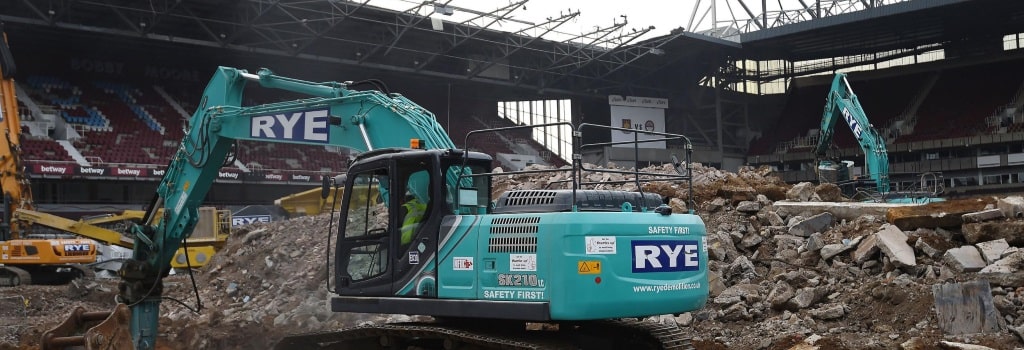
All good things have to come to an end, and the same unfortunately has to be said for football stadiums too. This article looks at the grounds which are soon to host their last match, the stadiums whose days are numbered and where fans will be watching their football from next.